A Genetic Lightbulb Moment
What is epigenetics?
The cells in our body that contain DNA (so most of our cells, not including our red blood cells) also contain the same genes. However, not all of our genes are active in every cell. Instead, cells are programmed during the early stages of development and specific genes are switched on or off depending on what is required for that cell. This process is known as epigenetics.
But how are our genes switched on or off?
To understand this, we need to understand how DNA is packaged.
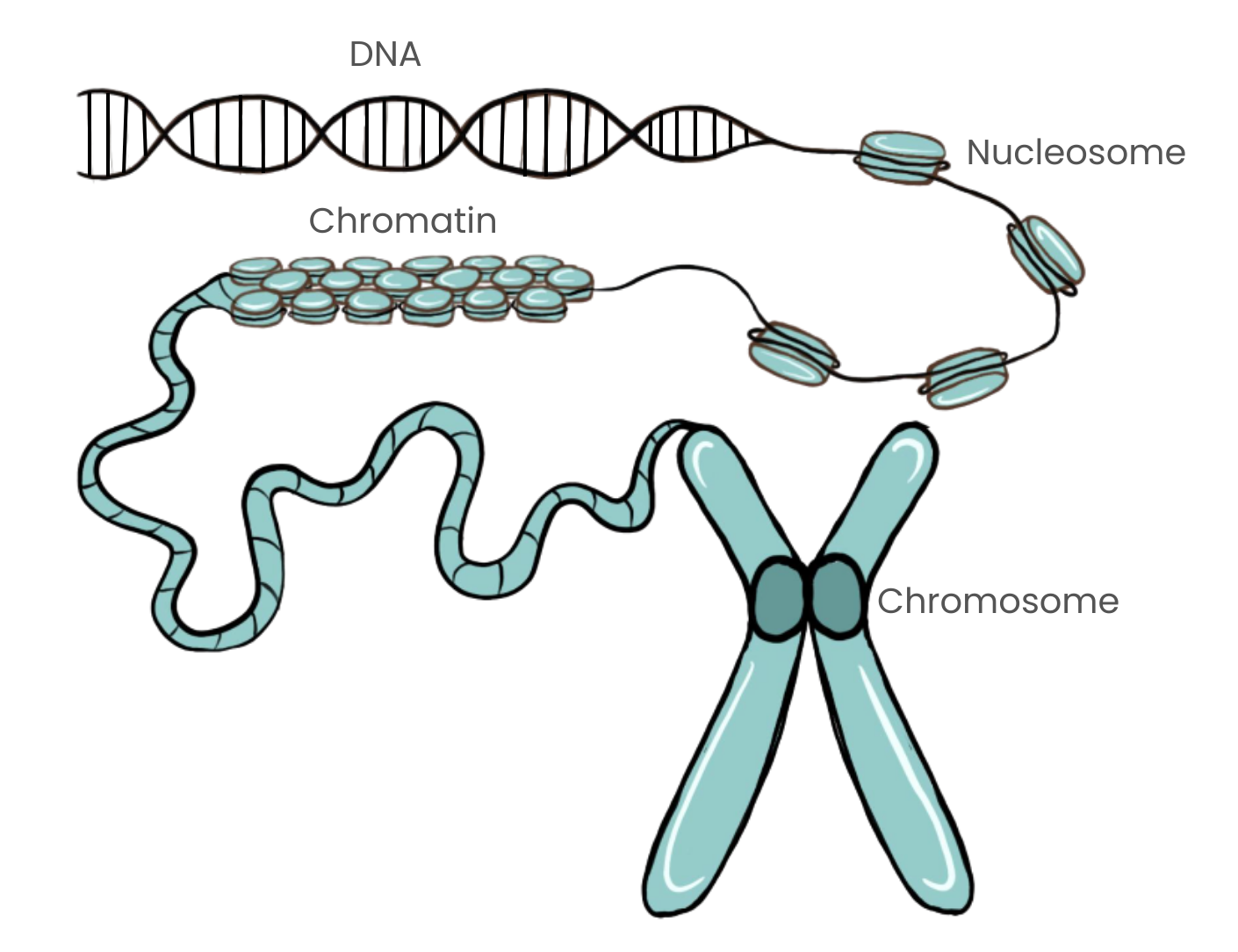
DNA forms a double helix structure that winds around proteins called histones to form nucleosomes. These nucleosomes pack together to form chromatin, which loops to form chromosomes. This is an efficient packaging process that makes sure that every cell contains all of our DNA.
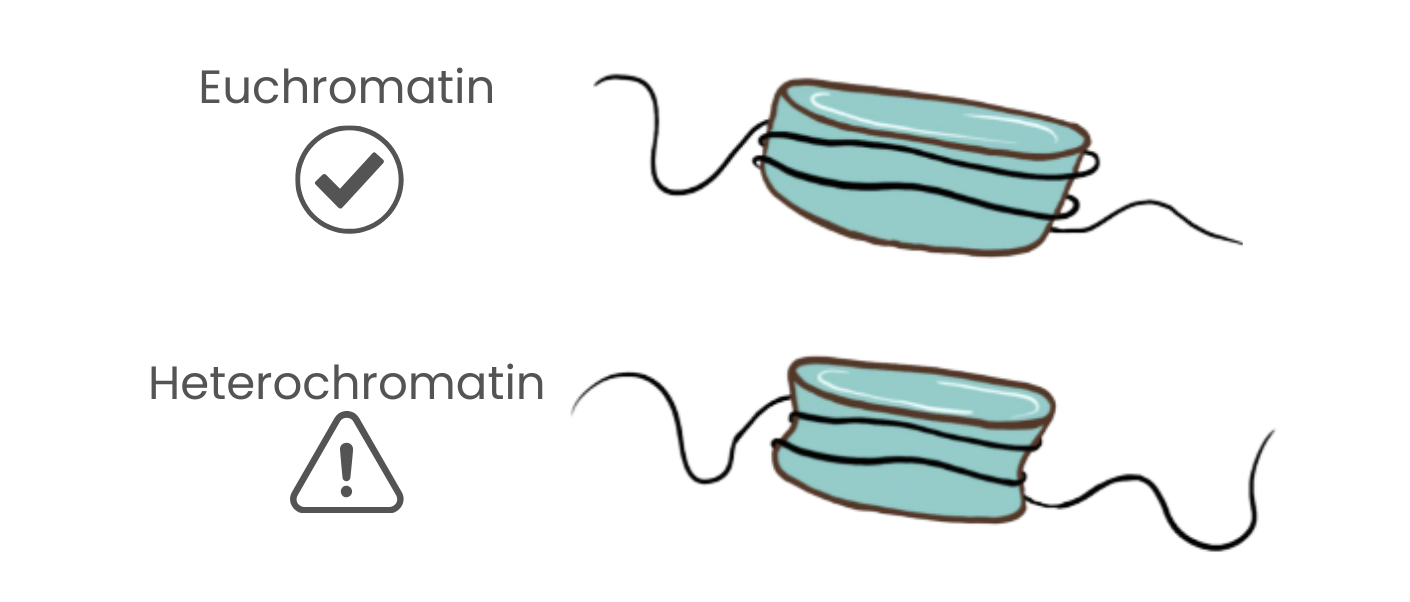
The purpose of most of our genes is to make proteins through a process called transcription. If DNA wraps around histone proteins too tightly, the genes cannot be transcribed into proteins because they cannot be reached by the necessary transcription factors. This is called heterochromatin.. Alternatively, if DNA is looser around the histone proteins, the genes are more easily reached by transcription factors and therefore can be transcribed. In other words, the gene is switched on. This is called euchromatin.
So how are our genes switched on or off?
Histones have tails where chemicals can bind in order to influence the activity of DNA. These are called histone modifications, and they control whether a gene is switched on or off, or whether a gene is expressed or repressed. Two of these chemicals are methyl groups and acetyl groups.
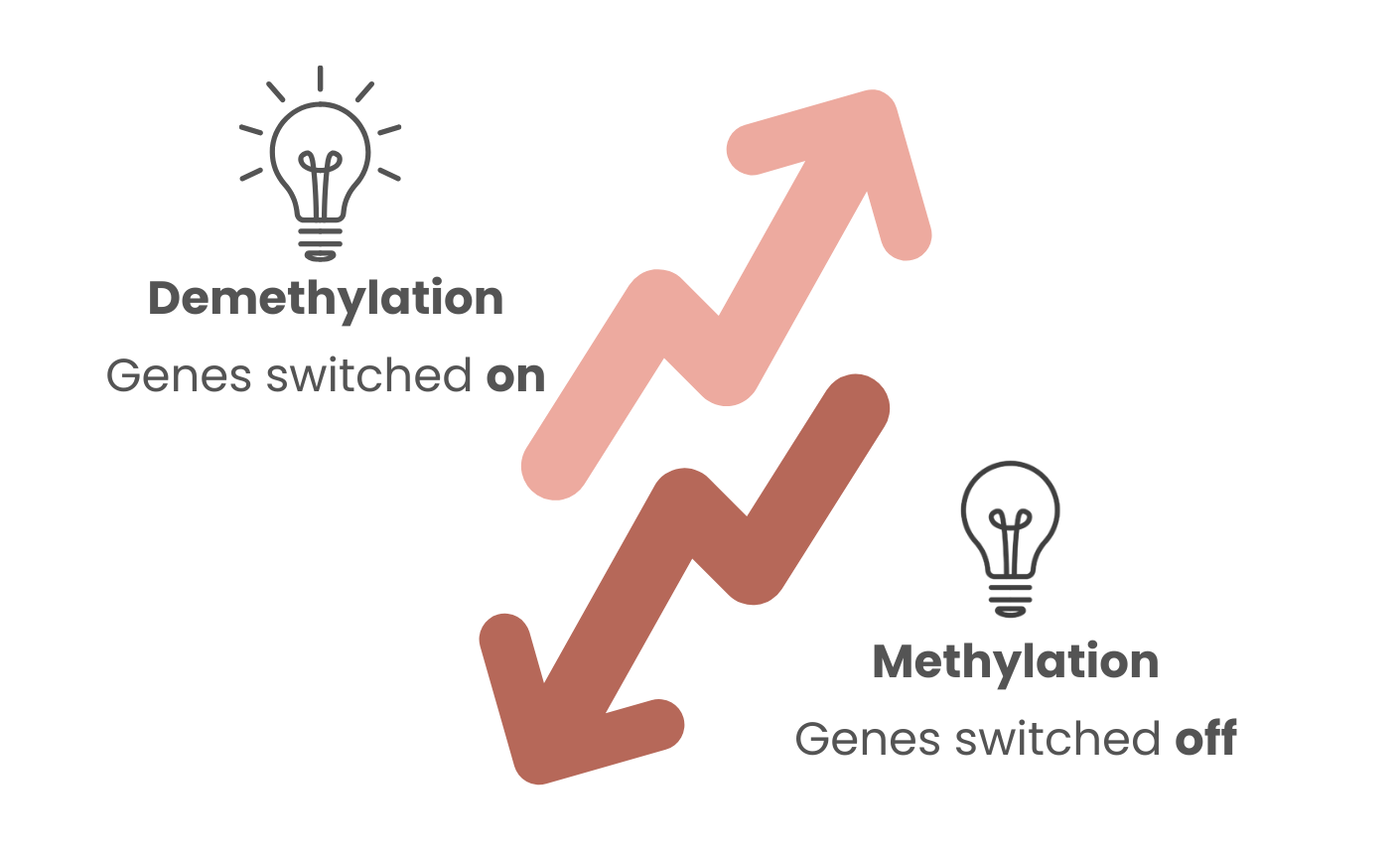
Methylation is the addition of methyl groups onto histone tails. When this happens, DNA winds more tightly around histones, forming heterochromatin. This tighter connection switches genes off, because transcription factors cannot easily reach the DNA to transcribe genes into proteins.
Demethylation is the removal of these methyl groups, which loosens the DNA around the histones and forms euchromatin instead. This switches genes back on, because now transcription factors can reach the DNA and transcribe genes.
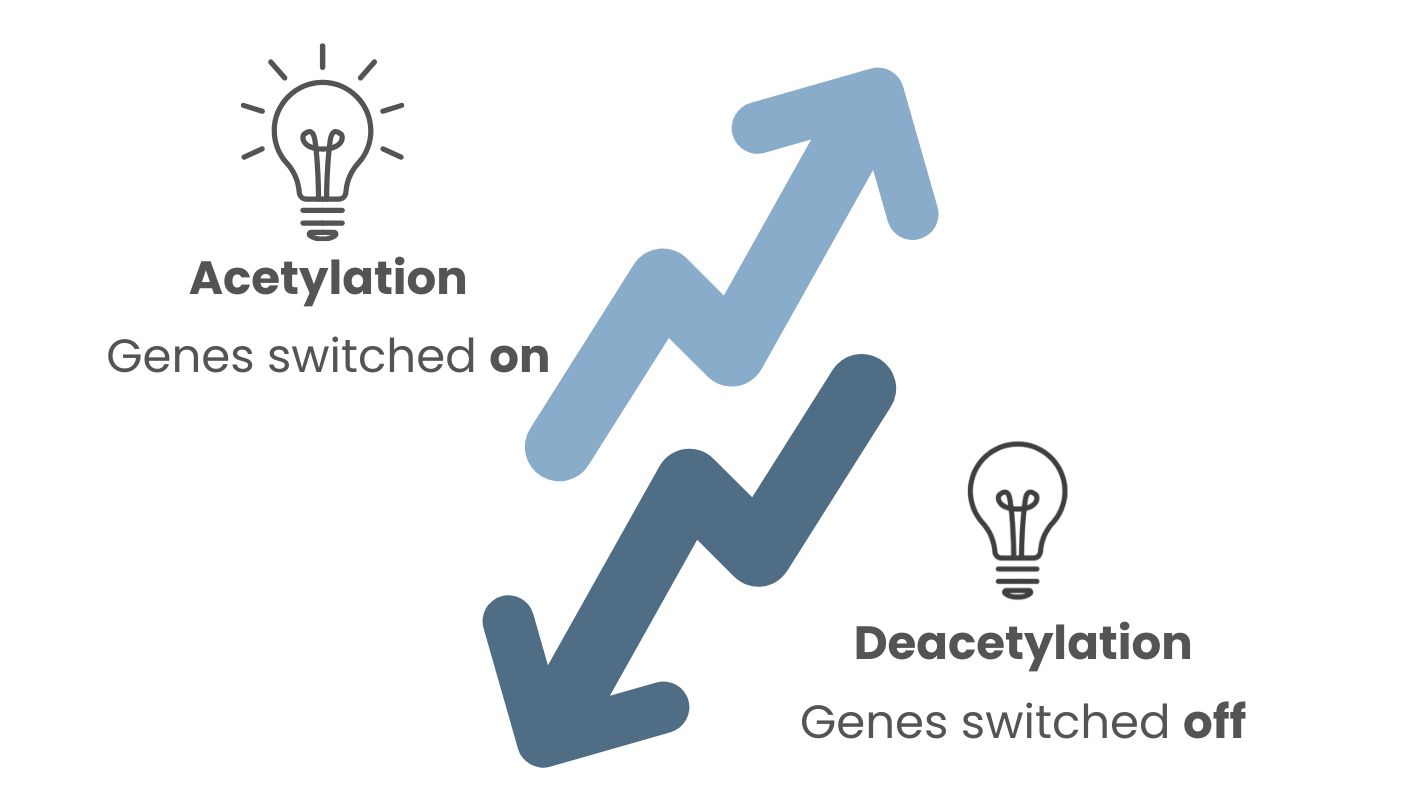
Acetylation is the addition of acetyl groups onto histone tails. Unlike with methylation, this makes DNA wind loosely around the histones, forming euchromatin. The genes are easily accessible and therefore are switched on.
Deacetylation is the removal of acetyl groups from histone tails. Unlike with demethylation, this causes DNA to wind more tightly around histones, forming heterochromatin. The genes are no longer accessible and are switched off.
So, depending on the presence of histone modifications like methyl and acetyl groups, different genes in our DNA can be switched on or off. This is why different cell types don’t look the same, because they express different genes to help them perform different functions.
If you found this topic interesting, consider checking out my case study focusing on how epigenetics is involved in the development and treatment of cancer.
References
Ospelt, C. (2022). A brief history of epigenetics. Immunology Letters, 249, pp.1–4. doi:https://doi.org/10.1016/j.imlet.2022.08.001.