Unusual Nature: the diapause phenomenon
Diapause is a phenomenon in nature that allows some species to pause the development of an embryo until environmental conditions are more favourable. In other words, diapause allows some animals to pause their pregnancies. Diapause is influenced by a number of factors including the environment, hormones, and genes. For example, a lack of food in the winter can influence the activation of diapause, pausing the pregnancy, whilst an increase in food in the spring can influence the termination of diapause, allowing the pregnancy to continue. Hormones and genes are responsible for activating and maintaining diapause.
Diapause is split into two subtypes: facultative and obligate.
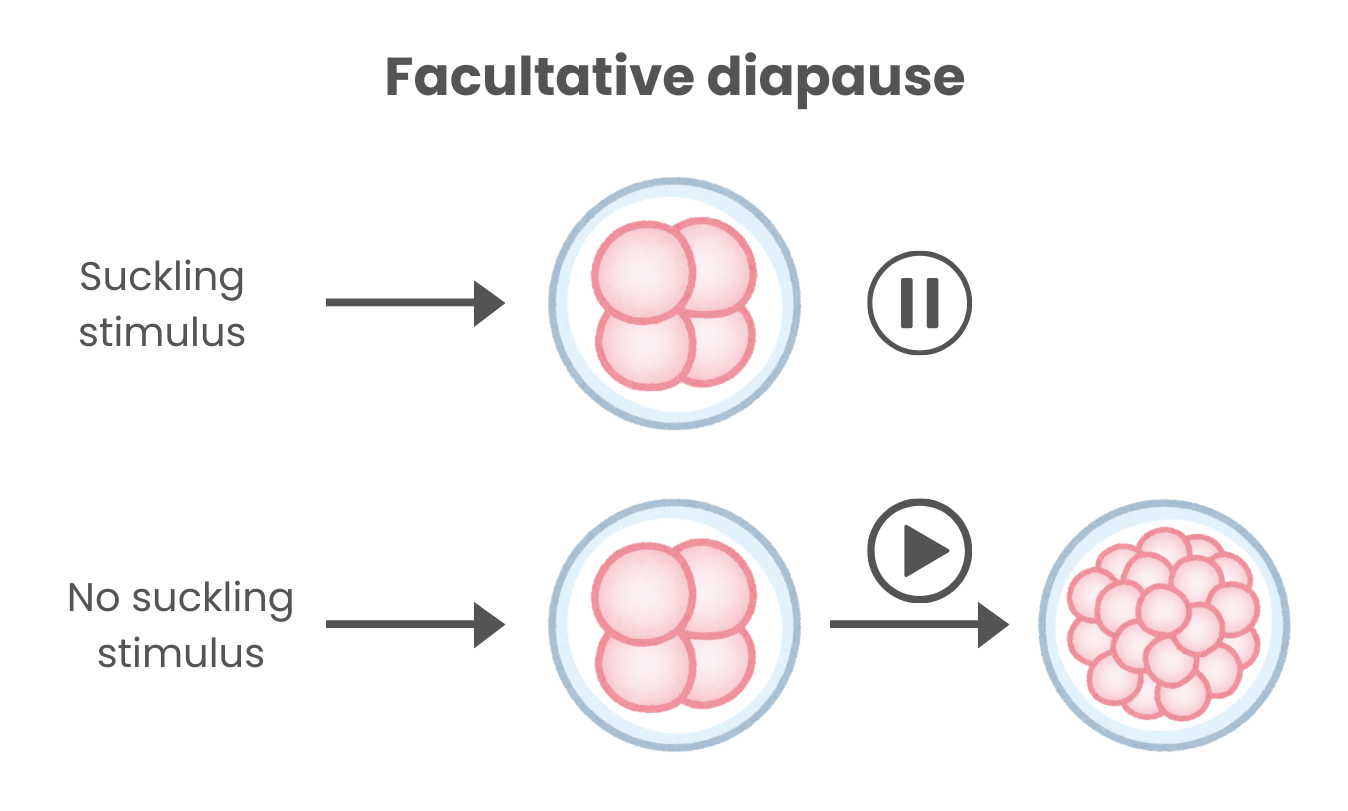
Facultative diapause is caused by lactation, where a suckling stimulus causes diapause to activate. Rats and mice experience this type of diapause. When their young are suckling, having another litter would be a disadvantage, so diapause is activated to pause the pregnancy. Subsequently, when the suckling stimulus is removed, diapause is terminated and the pregnancy continues.
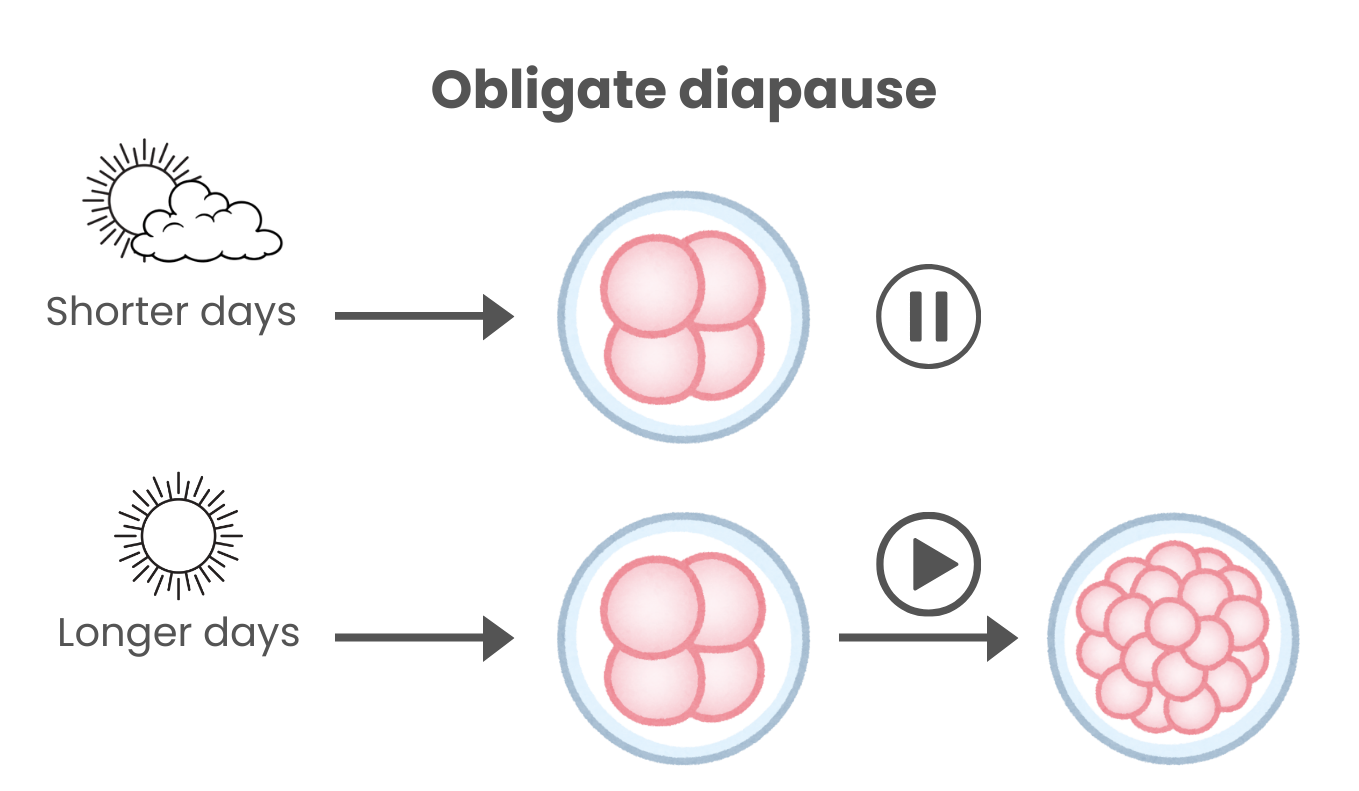
Obligate diapause is controlled by seasonal changes and occurs reliably through the year, not just when there is a suckling stimulus. In the winter, when there is a shorter sunlight length through the day, diapause is activated. This coincides with a lack of food and a drop in temperature, both of which would make having young a disadvantage. In the spring, when the amount of sunlight through the day increases, diapause is terminated and the pregnancy continues. This also coincides with an increase in food and a rise in temperature, which are both advantageous. American minks experience obligate diapause, whilst Tammar wallabies experience both facultative and obligate diapause.
The roe deer is the first animal in which diapause was discovered, back in the mid-1800s. Interestingly, the roe deer is also an exception to the diapause rule. Whilst roe deer experience obligate diapause, the hormones that usually control this subtype such as melatonin (linked to the amount of sunlight) have no effect on the activation or termination of diapause. How roe deer control diapause is not yet known fully, and more research is required to find out.
Diapause is an example of a resilience trait that is found in only seven orders of mammals. It gives animals a resistance to stress and allows them to be resilient to environmental changes, protecting their young and promoting species survival in the face of rapid climate change. A better understanding of how diapause works could be used to induce diapause states across related species, aiding in the conservation of endangered species.
Interested in learning more about diapause and the mechanisms behind it? Check out my in-depth literature review here.